
Creative Strategy: The Complete Guide
Most teams don't have a creative strategy. They have a routine: launch a few ads, find a winner, scale it, watch it fade after a few weeks, then scramble to make something new. Every cycle starts from zero.
Creative now decides more of the outcome than anything else you control. Google's research attributes to it about 70% of campaign success.
A creative strategy is how you stop starting from zero.

Used by 1,000+ performance teams





What is creative strategy?
A creative strategy is a documented plan that connects who you're trying to reach, what you'll say to them, how it will look on each channel, and how you'll test and learn — so every ad is a deliberate hypothesis instead of a guess. It answers four questions: who is this for, what angle will move them, in which formats, and how will we know it worked. The word that matters is documented. If the strategy lives in one person's head, it isn't a strategy — it's a dependency.
Step 1: start from evidance, not a blank page
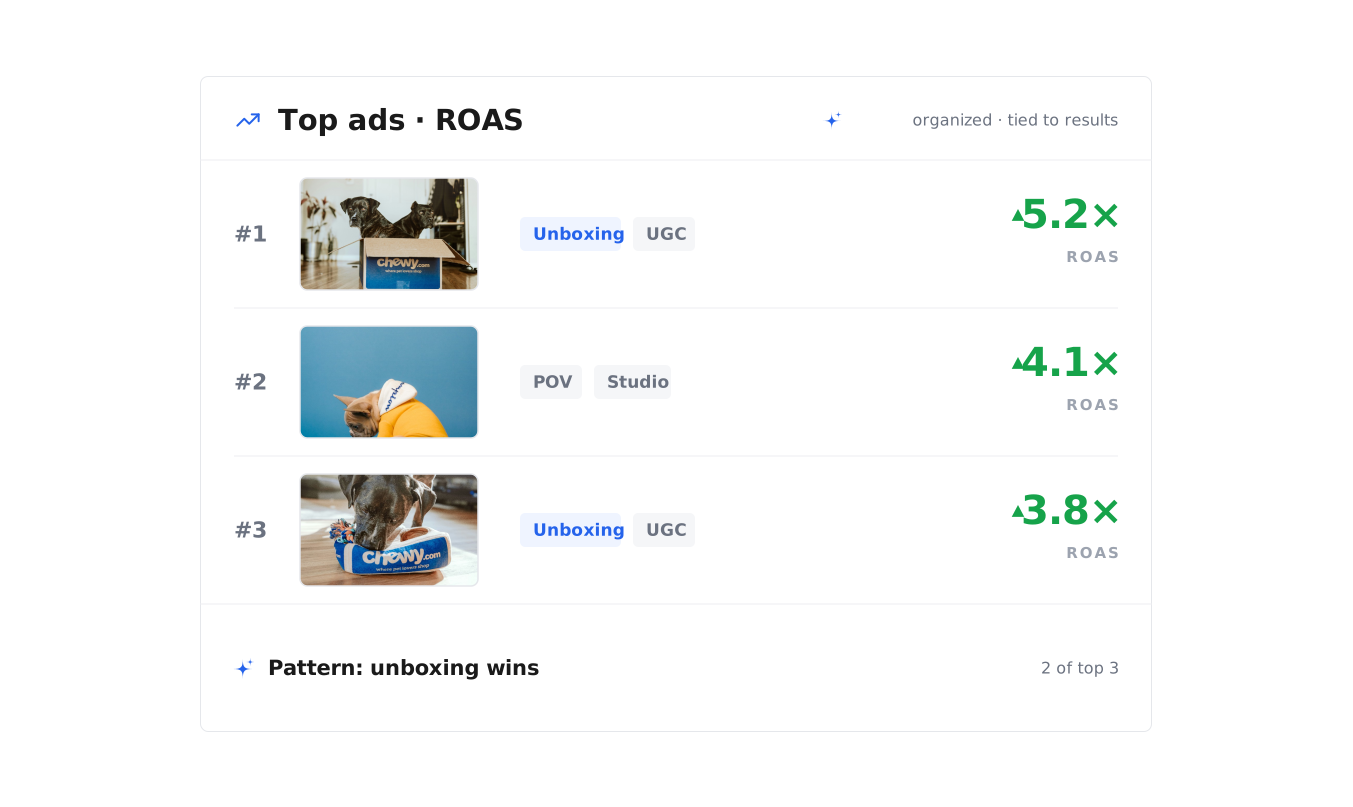
Before planning new work, audit what you already have: every ad you've run, every asset you've made, and how each performed. Winning hooks, formats that died, angles you've never tried — that history is your strategy's raw material, and most teams can't see it because it's scattered across ad accounts, drives, and old decks.

Step 2: build the angle matrix
An angle is the persuasive idea of an ad — not its color scheme. Problem/solution. Social proof. Founder story. Us-vs-the-old-way. Demonstration. Cost-of-inaction. Strong strategies test distinct angles, not cosmetic edits: changing the background is a variation; changing the argument is a test.
Step 3: plan modular production
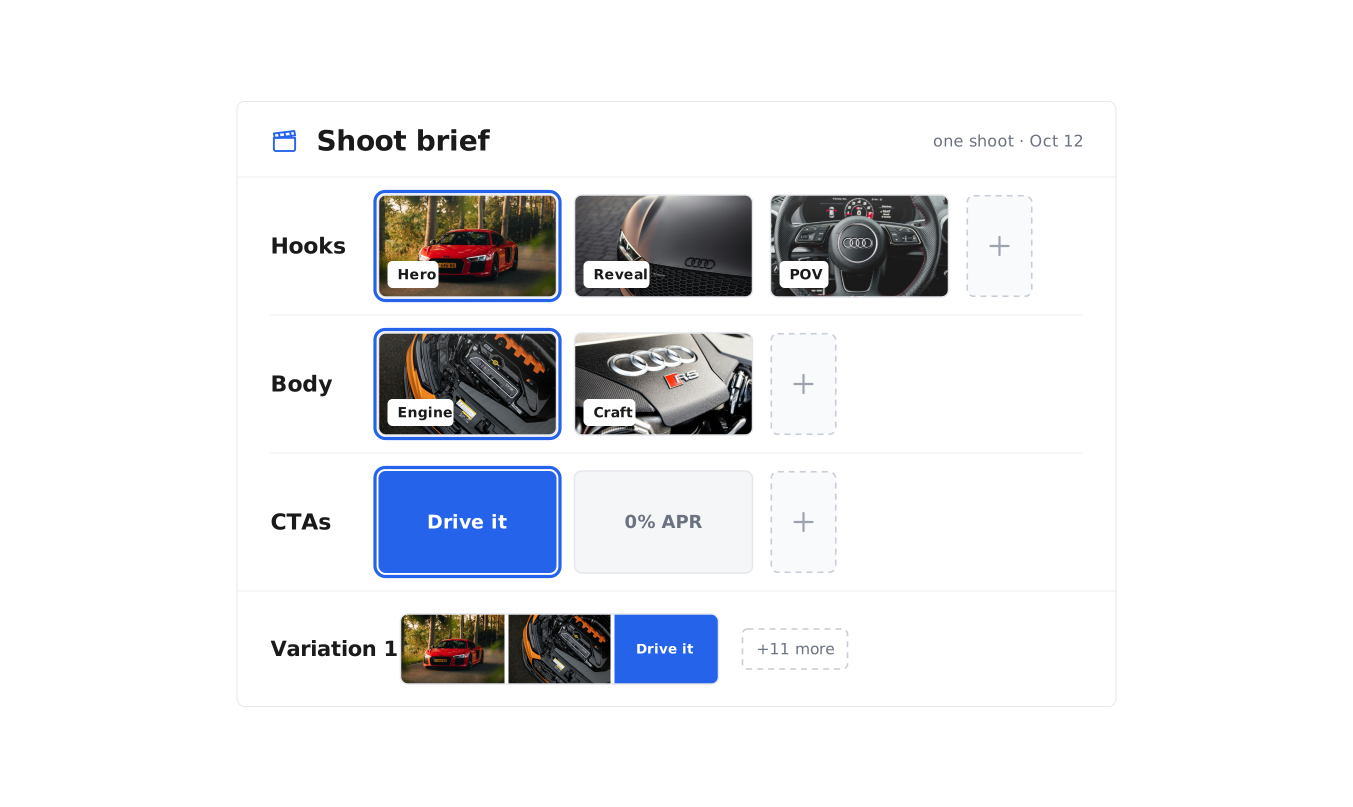
The teams that sustain creative velocity don't produce finished ads one at a time — they produce components: hooks, demos, testimonials, proof moments, CTAs — tagged and reusable. New variations come from recombining proven parts, which is how you test 3–5 variations a week without 3–5 shoots a week.
Step 4: test like a system
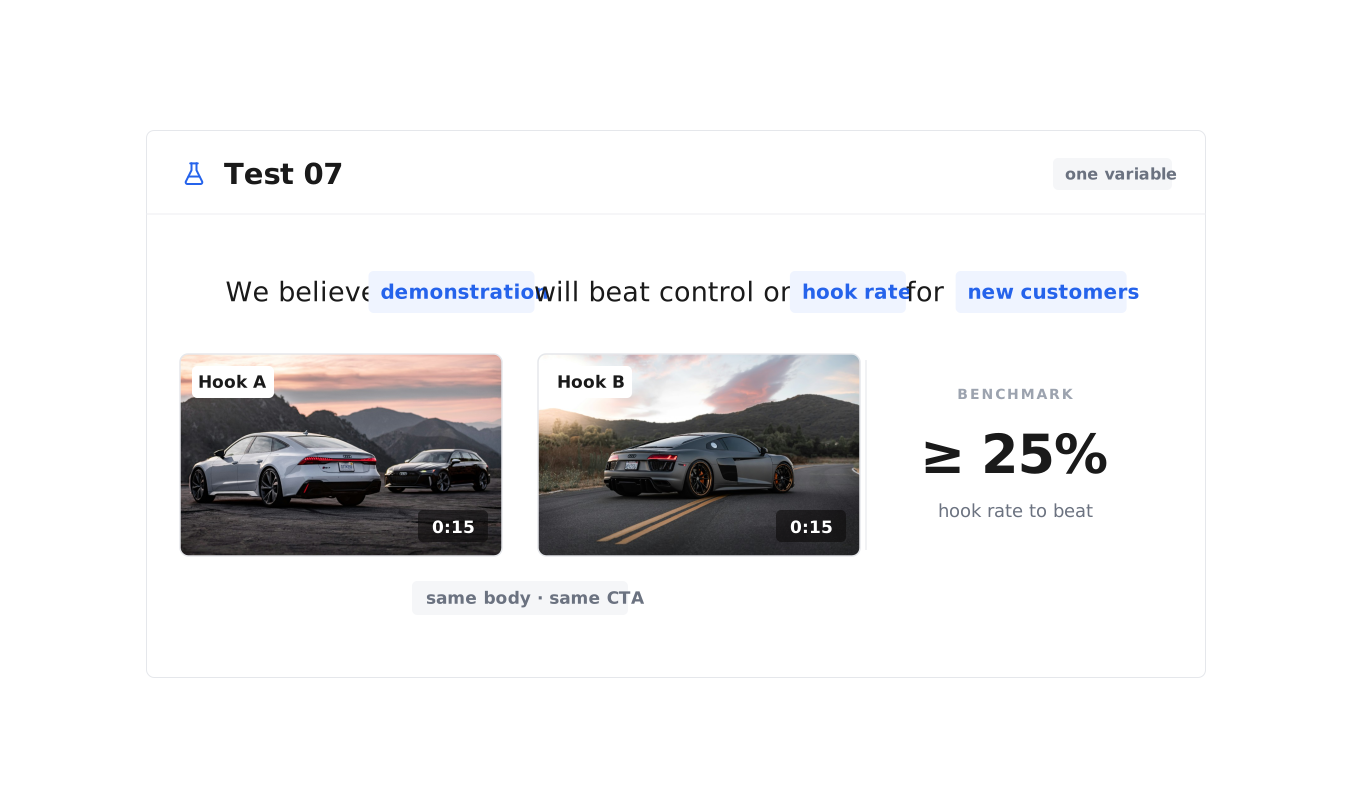
One variable per test. A hook test changes the hook, nothing else. Give tests a real success metric before launch — for video, the hook rate benchmark is roughly 25–30% (three-second views); below 20% means iterate the opening, not the whole ad. Promote winners into rotation, kill losers fast, and expect winners to fade: plan refreshes on a 30–45 day rhythm rather than reacting to the dip after it costs you.
Step 5: close the loop
This is the step that separates a strategy from a routine: what you learn must attach to what you made. When a winner emerges, record why — which angle, which hook, which audience — somewhere the next brief actually starts from. Otherwise the learning retires with the campaign, and next quarter starts from zero again.

Creative strategy in practice: examples and the advertising frame
Frequently asked questions
What is creative strategy?
A creative strategy is a documented plan connecting your audience, your message angles, your formats, and your testing — so every ad is a deliberate hypothesis instead of a guess. It answers in writing: who is this for, what will move them, where will it run, and how will we know it worked.
What does a good creative strategy example look like?
One page: the objective and KPI, the audience's pains in their own words, 4–5 message angles crossed against those pains, a test plan with one variable per test, and a learning log that feeds the next round. The examples above show the matrix in action — the template in this guide is the working format.
Do you need a creative strategy agency?
Many teams work with one, and a good agency brings pattern knowledge across accounts. Either way, the strategy should be grounded in your own performance data — what worked for your brand, not the category average — and documented where your team can run it. That's true whether the strategist sits in-house or at your agency.
How often should you refresh your creative strategy?
The document: review after every testing cycle, update the angle matrix with wins and losses. The creative itself: plan rotation on a 30–45 day rhythm, and watch fatigue signals (rising frequency, declining hook rate) so replacements launch before performance dips, not after.
How does AI change creative strategy?
Two ways. Production: AI widens ideation and speeds variations — useful, but volume without strategy is the trap. Analysis: AI can now read your entire creative history and its results, so the evidence step stops being manual. In Uplifted, the agent drafts strategy from your real data with a source behind every number — the thinking stays yours; the archaeology doesn't.
Your creative strategy, drafted in minutes
Connect your sources and ask Uplifted's AI creative agent - your winning angles, audiences, and results, compiled into a cohesive strategy